News desk

Turn a raw take about one story into a publishable news video: the stalls, the false starts, the sentence said twice and the stretches that went nowhere come out, the voice and the pauses that are doing work stay. Horizontal, no captions burned, levelled for the feed.
- 1 template
- 3 rules
Style guide
STYLE.mdA news take
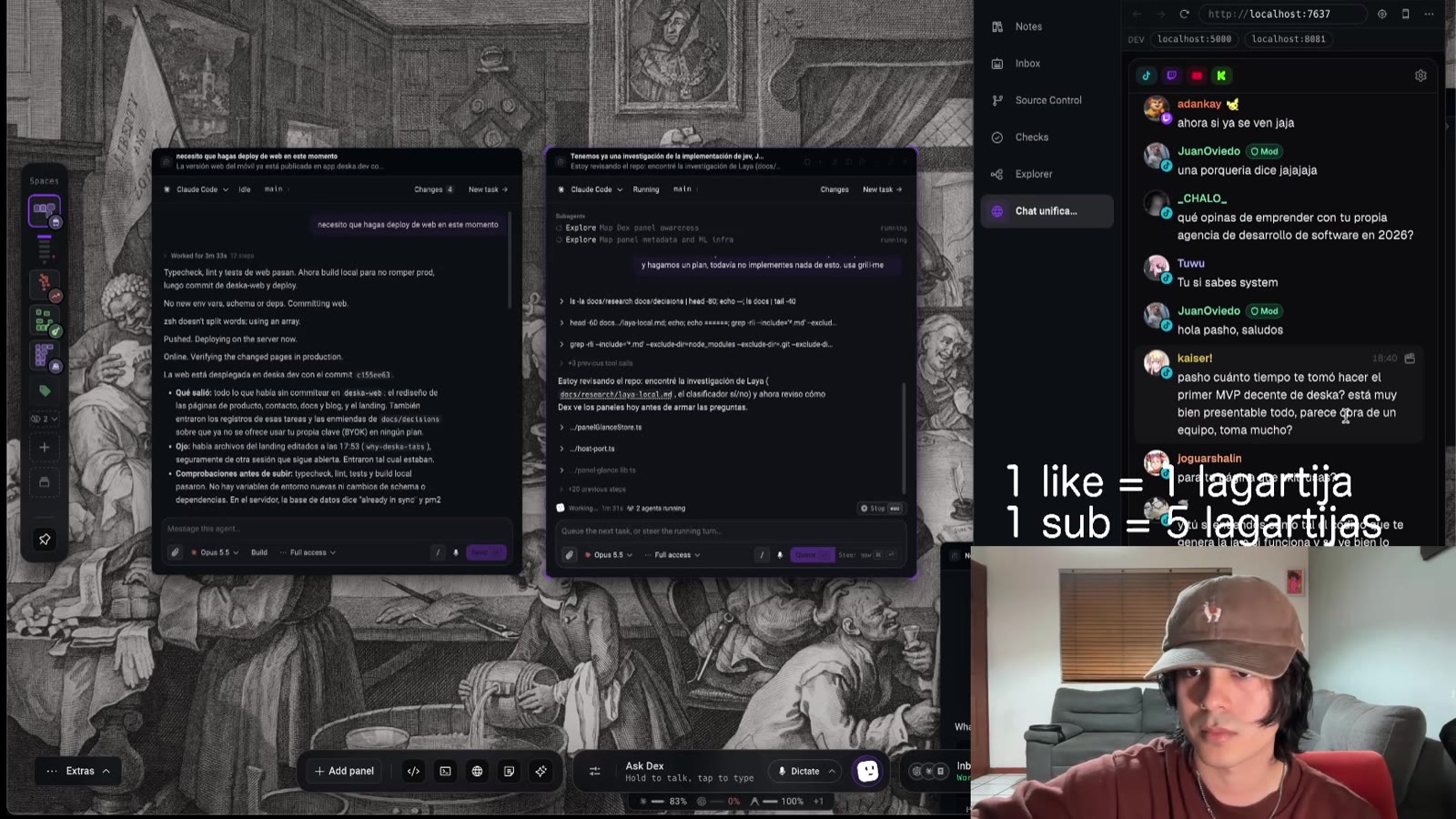
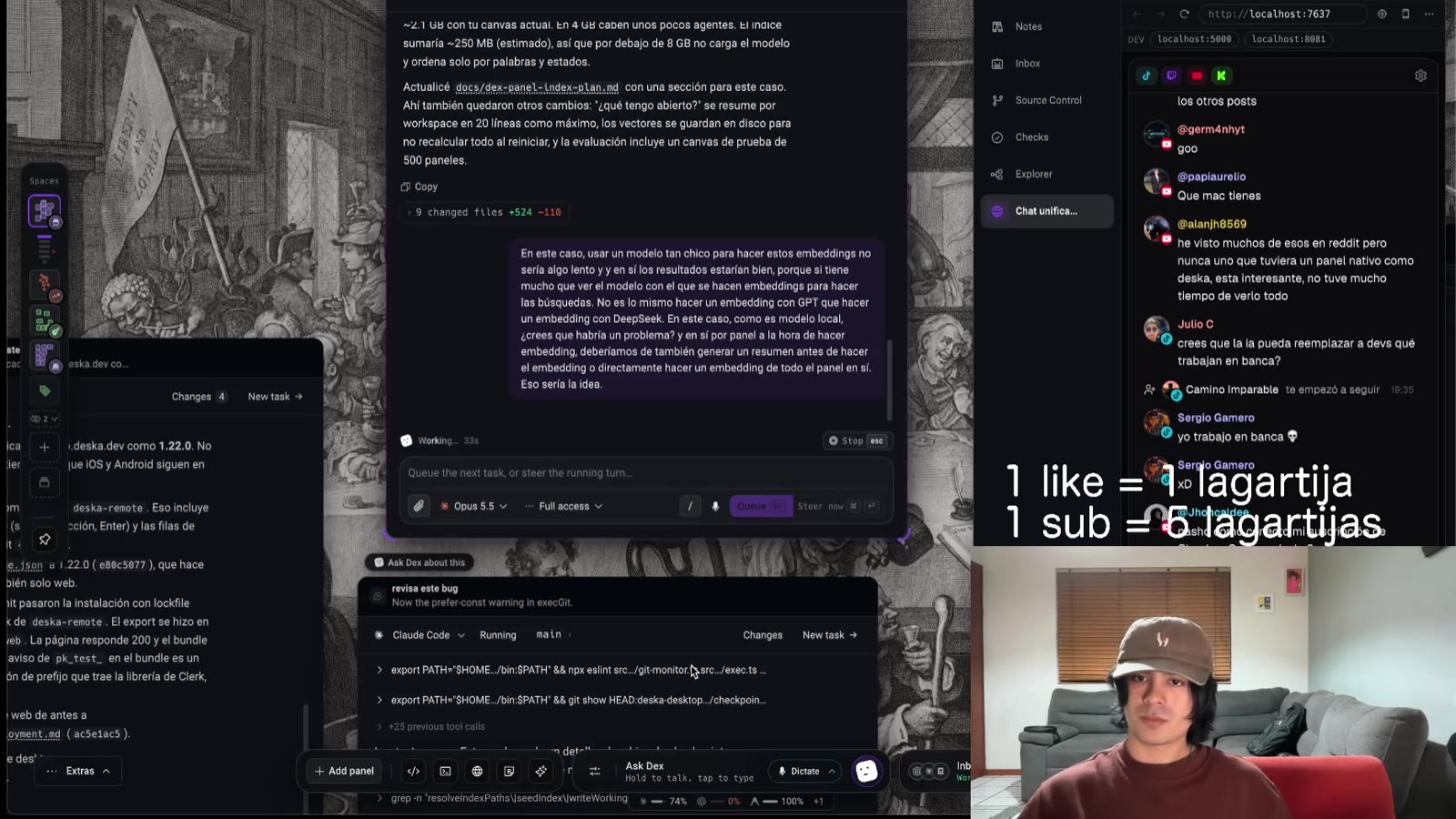
One person, one story, one sitting. The camera is on, the screen shows the thing being talked about — the post, the release notes, the benchmark, the receipt — and the video is that person reading it, testing it and saying what they think of it. It is not a stream and it is not a short. It is the argument, in the order it was made, with everything that was not the argument taken out.
Who it is for
Somebody who already saw the headline and wants to know whether it matters. They came for a verdict from a person who used the thing. They will watch twenty-five minutes of it, but only while every minute is still about the story.
What a good one does
- It is about one thing. A title that is a claim, not a topic: "Anthropic actually fixed Opus", not "Opus 5.5 thoughts". If the take wandered into a second story, that is a second video.
- It opens on the claim. The first thirty seconds say what happened and what the speaker thinks of it. Everything before that — the settling in, the "let me pull this up", the hello — is where the video starts after.
- It keeps its order. The claim, then what was actually run or read, then the verdict. Never reordered: in a news take the order is the reasoning.
- It shows the source. The post, the diff, the graph, on screen, while it is discussed. A stock picture over a screenshot is not illustration, it is cover.
- It ends on the verdict, not on the speaker running out of things to say.
What comes out
This is most of the work, and it is all subtraction.
- The stalls. "Um", "uh", the hum before a sentence starts. Gone, with the hesitation around them.
- The sentence said twice. A take started, abandoned and started again — "as I said before, the— as I said before, this model is the one" — keeps only the run that finished. Both are speech; a viewer hears the first one as a mistake, because it was.
- The dead air. Reading in silence, waiting on a build, hunting for a tab. Every pause over about 0.6s goes; the ones under it are how the person talks and they stay.
- The tangent that went nowhere. A minute about something else, a point picked up and dropped, a joke that did not land. Cut it whole, on sentence boundaries, never mid-word.
- The lost thread. Where the speaker loses their place and restates the point a minute later, the restatement is the take: keep it and drop what came before it.
What stays
- The voice. "Like", "so", "actually", "honestly", "kind of" — these are not filler, they are how the person sounds. A published take of this kind keeps "like" more than once a minute. Scrub them and it reads as a press release.
- The pause that is doing work. The one before the verdict, the one after a number.
- The clip being played. When somebody else's video, stream or demo is on screen, it runs whole, with the reaction on top of it. Cutting inside it removes the thing being reacted to.
- The sponsor read, where it sits and at its own length.
- The mistake that is the point. A model failing live, a command erroring: that is evidence, not a flub.
How it looks
Horizontal, 16:9. The screen fills the frame with the camera small in a corner; the speaker goes full frame when there is nothing to show. No burned captions — the platform draws its own, and a second set covers the screen. No music bed, no stings, no zoom every fifteen seconds. Levelled to about -14 LUFS so it arrives as loud as everything beside it.
What it never does
Cliffhanger hooks, "wait for it", countdowns, a thumbnail promise the video does not keep, a tease of something that comes ten minutes later. The story is the hook.
Templates
News desk — daily
news-desk-dailyThe same take, cut for the same-day upload: eight to thirty minutes about one story, every stall and false start out, nothing added. Stall list covers English and Spanish.
Rules
Text your agent follows. Read it before you install.A news take is edited as one
news-takeWhen the recording is one person covering a piece of news in one sitting — talking to camera, or over their own screen — rather than a stream, a stream highlight or a conversation
One person, one story, one sitting: the video is the argument with everything that was not the argument taken out.
Somebody else's clip runs whole
play-the-clip-wholeWhen the speaker plays somebody else's video, stream, demo or interview on screen and talks over or after it
A reaction only makes sense on top of the thing being reacted to.
The sponsor read stays whole
sponsor-read-staysWhen the take contains a sponsor read, an ad or a plug the speaker was paid for
It is the one part of the video somebody has been paid to deliver in full.
Quick actions
Buttons it adds beside the agent conversation.Tighten this take
Apply the News desk — daily template to {selection}: cut the stalls, the false starts, the retakes and the dead air, and leave the voice alone.
Drop what went nowhere
Go through {selection} and drop the stretches that are not about the story — the warm-up, the tangent that was abandoned, the part where the thread was lost. Cut on sentence boundaries and keep the order.
Open on the claim
Find where {selection} first states what happened and what you think of it, and start the video there. Everything before it goes.
What correct looks like
review.json4 measured checks and 5 questions the agent answers with evidence; 5 of them critical, which hold an export until fixed or waived.